Most conversations about computer vision start with the model: which architecture, how many parameters, which pretrained checkpoint. That conversation matters less than most teams think. In practice, the ceiling on model performance is set long before training starts — by the data.
This is especially true for 3D-aware AI: training AI for AR/VR, robotics, or fashion tech requires data that a 2D image dataset simply can't provide — accurate geometry, consistent scale, and clean multi-view coverage of real-world subjects.
Why 3D data collection is harder than it looks
Collecting a usable 3D dataset is not "take more photos." It requires solving several problems at once:
- Consistent capture conditions — lighting, camera calibration and synchronization need to be repeatable across every session, or the dataset introduces noise the model has to learn around instead of the signal you actually want.
- Full coverage — missing angles create blind spots that show up as failure modes months later, once the model is already in production.
- Ground-truth accuracy — geometry, texture and scale all need to be correct, not just visually plausible.
- Scale without quality loss — a process that works for 10 captures often breaks down at 10,000; throughput and quality control need to be designed in together, not bolted on later.
What a purpose-built pipeline changes
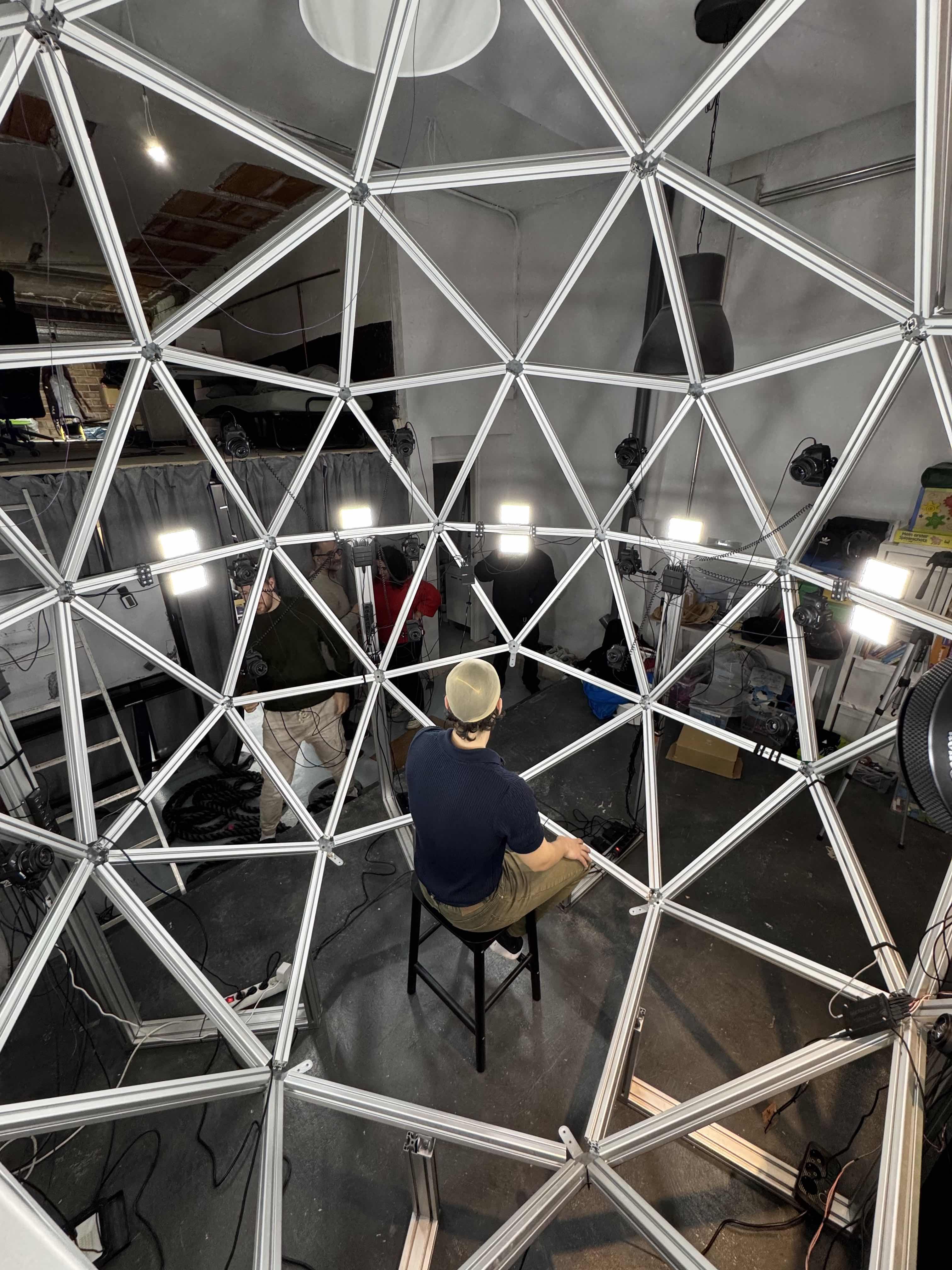
This is the problem our multi-camera scanning systems and data collection services are built to solve. Instead of ad-hoc capture, every session runs through a controlled, repeatable pipeline: synchronized camera and lighting rigs, standardized capture protocols, and quality checks before data ever reaches a training set.
The result isn't just "more data" — it's data a model can actually learn the right thing from, which usually means needing less of it overall to hit a target accuracy.
Practical takeaways for computer vision teams
- Budget time and process for data collection with the same rigor you budget for model training.
- Standardize capture protocols before scaling volume, not after.
- Treat coverage gaps as a data problem to fix, not a model limitation to work around.
- Where possible, separate data collection from data curation — the skills and tooling are different.
Better architectures will keep coming. Better data is the part that compounds — it improves every model you ever train on top of it.